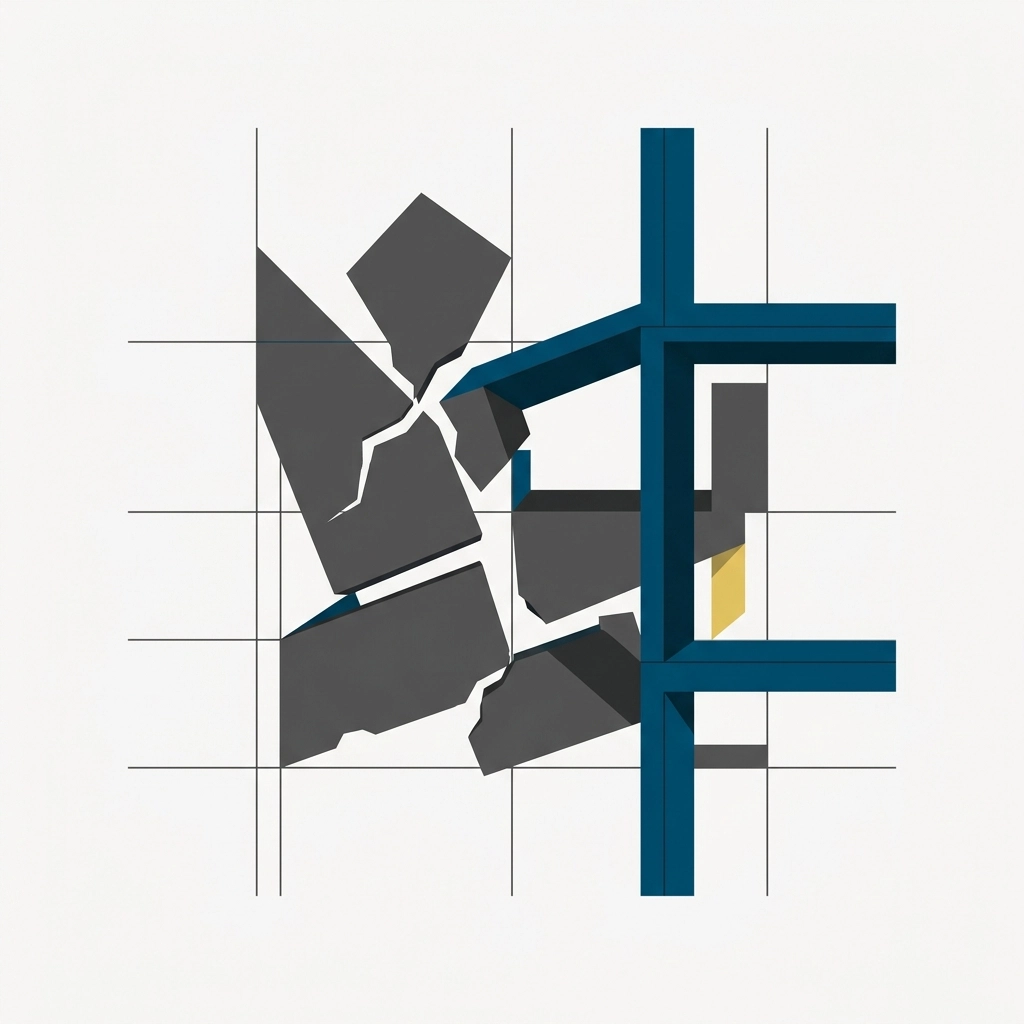
The traditional private equity model of multiple arbitrage and aggressive financial engineering has reached a structural limit. In an environment defined by higher capital costs and stagnant exit markets, value creation now requires a Leadership OS that can drive genuine operational alpha.
The Exhaustion of Financial Engineering
For decades, the private equity playbook was predictable. Investors acquired assets, optimized the capital structure, applied standard cost-cutting measures, and waited for market multiples to expand. This era is over. As of 2026, the industry is grappling with over $3 trillion in trapped assets and a significant exit drought. The math that supported the five-year hold and flip no longer works when debt is expensive and organic growth is the only remaining lever.
Most portfolio companies are currently operating with what we define at Rinnovare as a high "Drift Tax™." This is the hidden cost of leadership misalignment, unclear decision rights, and a lack of operational rhythm. When a firm relies on the old playbook, it often treats leadership as a variable to be managed rather than a system to be engineered. This oversight is precisely why so many "proven" playbooks fail to deliver expected synergies post-close.
The Leadership OS: A Structural Necessity
Value creation in the current market requires a shift from managing a portfolio of assets to architecting a portfolio of leadership systems. That is the role of a Leadership OS. At Rinnovare, we apply that structure through the Renewal Quotient™ framework and the RQ™ System. For private equity HR due diligence, HR transformation consulting, and CHRO advisory services, the issue is the same: enterprise value depends on whether the leadership system is actually reliable.
A Leadership OS is not a culture workshop. It is not a document. It is not a slide deck. It is the structural application of the RQ™ System through leadership architecture: decision rights, alignment, cadence, accountability, and the HR operating model required to support them. People strategy sits inside that architecture. It does not stand apart from it.

The RQ™ System: Three Canonical Products
Rebuilding the broken PE playbook requires a shift from managing people to engineering the leadership system itself. The RQ™ System delivers this through three canonical products, each serving a distinct structural purpose.
RQ™ Diagnostic
The RQ™ Diagnostic is the entry point. It reveals the structural fractures inside the leadership system and quantifies the Drift Tax™. It anchors the 12 signals of system failure within the five dimensions and 20 subdimensions of the RQ™ canon.
For boards, CEOs, and investors, it provides something traditional HR consulting cannot: a reliability assessment of the leadership system itself, not a sentiment survey of the people inside it.
RQ™ Roadmap
The RQ™ Roadmap follows the diagnostic. It is the sequenced structural reset required to restore reliability.
It does not describe tactical execution steps. Instead, it prioritizes the structural interventions that will reduce Drift Tax™ and realign the asset with the investment thesis.
It is the bridge between diagnostic truth and operational reality — the path that moves the organization from drift to disciplined renewal.
RQ™ Operating Model
The RQ™ Operating Model is the leadership architecture. It is a discipline, not a document.
It defines how leadership actually works:
- Decision rights
- Alignment mechanisms
- Operating cadence
- Accountability architecture
- The people strategy required to sustain execution
This is where organizational design and executive team effectiveness become structural rather than cosmetic. It replaces personality‑driven leadership with a repeatable, scalable operating system.
The Diagnostic Insight: Signals of Value Erosion
Private equity partners often notice the symptoms too late. The signals are usually explained away as growth strain or market pressure. In reality, they are structural indicators of leadership system failure.
- Re-litigation: Decisions made in formal forums are reopened weeks later.
- Heroic Founder Dependency: The business cannot move without one person in the middle of everything.
- Operating Model Drift: Structure no longer matches strategy, and accountability blurs.
- Shadow Decisions: Real power sits outside the stated decision path.
- Strategy Without Translation: The investment thesis is clear, but the leadership architecture cannot carry it.
These are not isolated talent issues. They are signs of a low Renewal Quotient™. They also signal where the Drift Tax™ is accumulating across decision quality, accountability, coordination, and operating rhythm.
Practical Implications for PE Partners
The shift from financial engineering to operational alpha demands a different discipline from PE sponsors. It requires looking past the board deck and into the leadership architecture of the portfolio company.
Use the RQ™ Diagnostic early
Traditional human capital review often stops at compensation, bench strength, or compliance. A stronger form of private equity HR due diligence examines the reliability of the leadership system itself. That is where value erosion begins.
Treat the HR operating model as part of enterprise design
The HR operating model should reinforce decision rights, role clarity, cadence, and accountability. This is where HR transformation consulting becomes commercially relevant. If the people system cannot support the operating model, execution will drift.
Use the Interim CHRO correctly
An interim CHRO should not be framed as the primary driver of transformation. In the right situation, the interim CHRO acts as a stabilizer and architect inside the broader Leadership OS. The role is to help steady the leadership system, support structural resets, and reinforce coherence during change.
The Emotional Layer Comes After the Structure
Structure alone is not enough. Rinnovare differentiates by addressing the structural layer through the RQ™ System and the emotional layer through The Hidden Emotional Contract™ at the same time.
The Hidden Emotional Contract™ sits beneath executive trust, fairness, safety, dignity, and meaning. In a pressured portfolio environment, breaches here often explain stalled integration, executive attrition, and quiet resistance at the top. This is where culture transformation consulting and employee engagement consulting become meaningful only after the leadership architecture is made clear.
If the structure says one thing but the lived experience says another, drift returns. That is why the Leadership OS must hold both the hard system and the emotional reality together.
Practical Implication for CEOs and PE Partners
If the numbers look acceptable but the leadership team is exhausted, the asset is not as healthy as it appears. If the same operational failures return each quarter, the Drift Tax™ is already present.
This is usually not a motivation problem. It is a structural one. The work is to diagnose the system, reset the leadership architecture, and restore reliability.
**********************
If you are assessing a portfolio company, navigating a leadership reset, or evaluating the performance of a PortCo, start with the structure.
If you are facing this moment, a quiet next step is a conversation about whether an RQ™ Diagnostic is warranted.
https://rinnovarehr.com/services
https://rinnovarehr.com/about
https://rinnovarehr.com/contact

Category: Enterprise Value
Secondary Category: Organizational Drift