Category: Organizational Drift
-
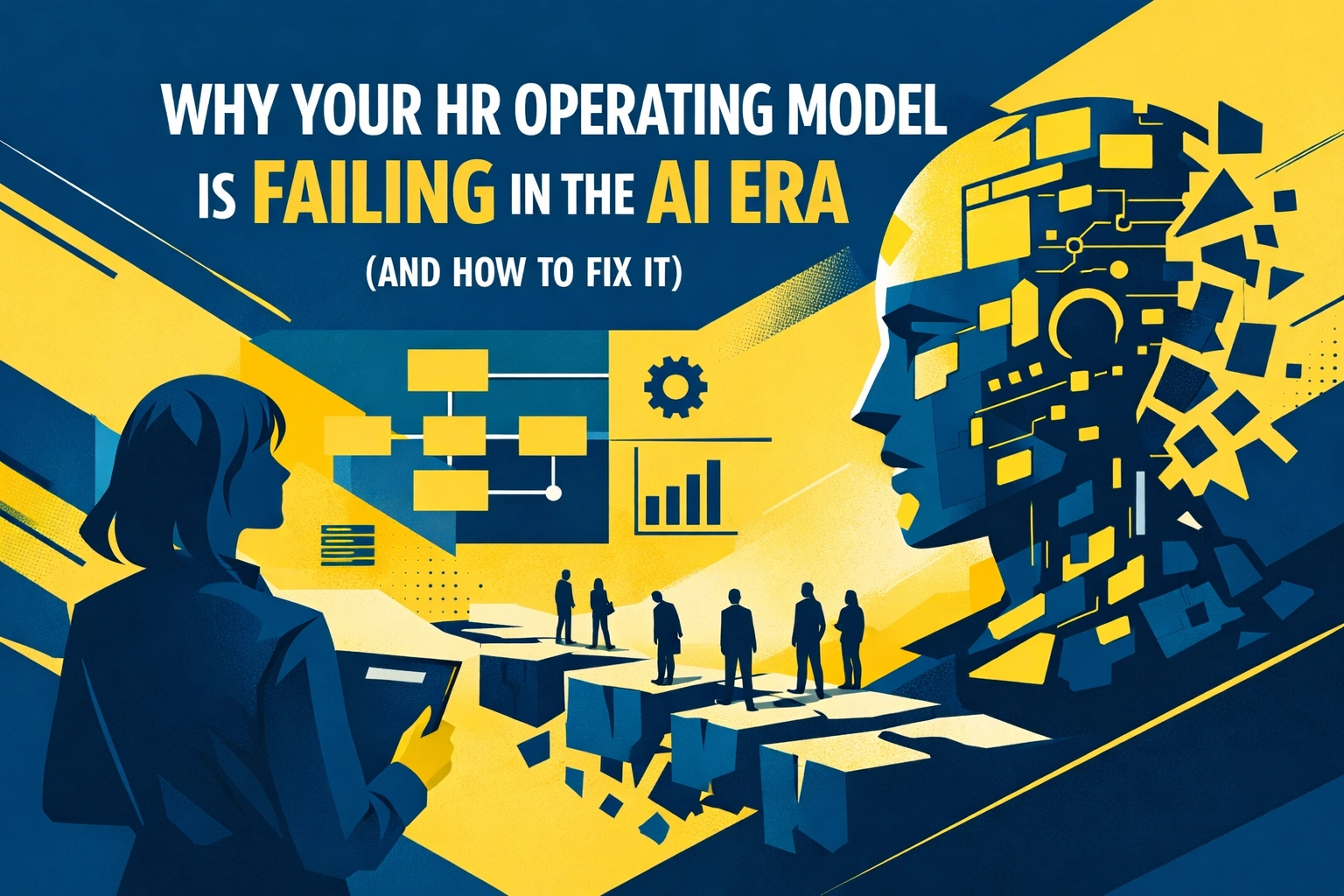
Why Your HR Operating Model is Failing in the AI Era (and How to Fix It)
Let’s be honest: most HR operating models are relics. If you are an Enterprise CHRO or a Growth-Stage CEO, you’ve likely spent the last decade fine-tuning a version of the classic "Ulrich Model." You have your Centers of Excellence (CoEs) for expertise, your Shared Services for efficiency, and your HR Business Partners (HRBPs) to sit…
-
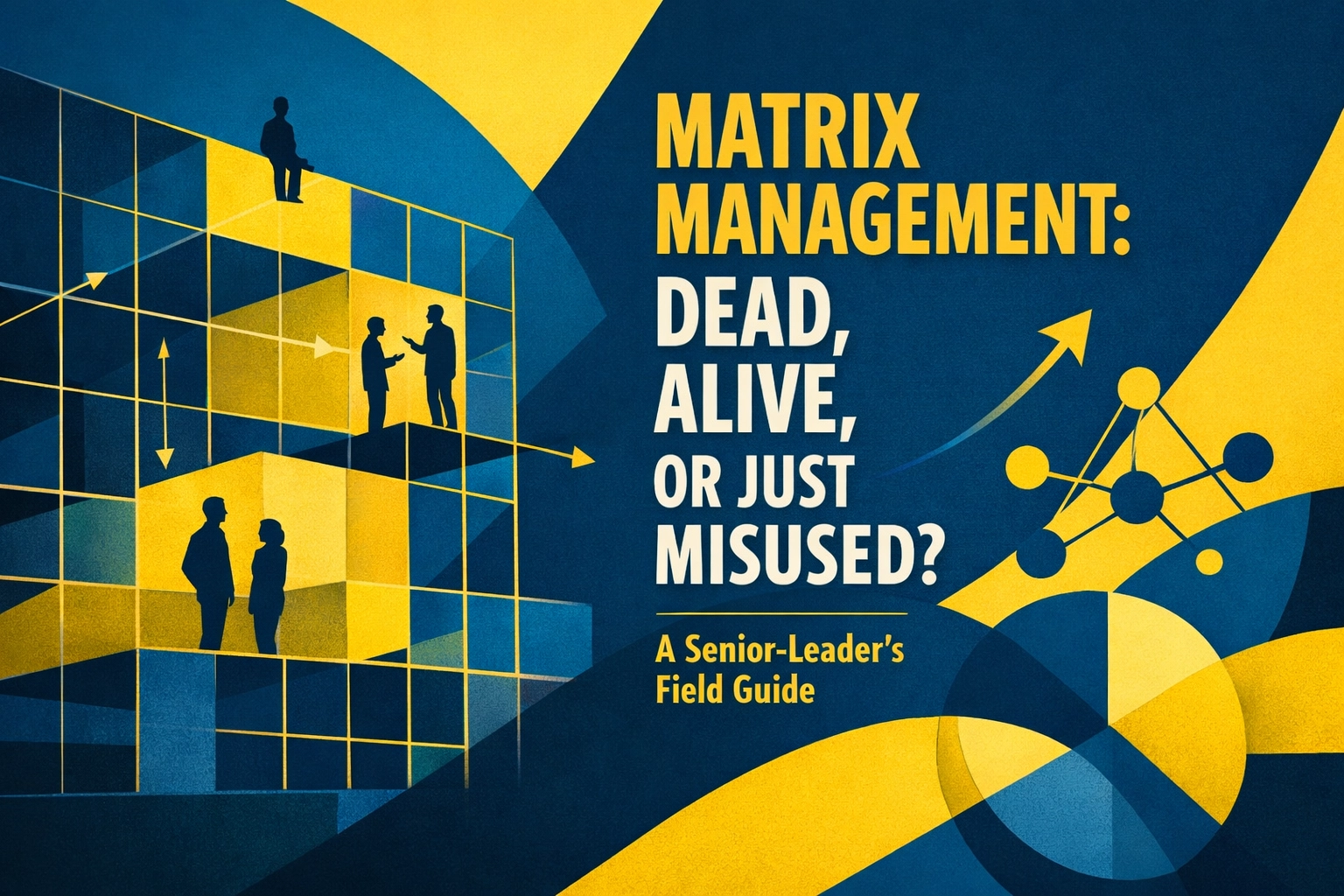
Matrix Management: Dead, Alive, or Just Misused? A Senior-Leader’s Field Guide
Here's a question that comes up in nearly every organizational design consulting engagement I've led: "Should we matrix this?" It's usually asked with a mix of hope and dread. Hope that a matrix structure will magically solve cross-functional coordination problems. Dread because someone in the room has lived through a badly implemented one before. So…
-
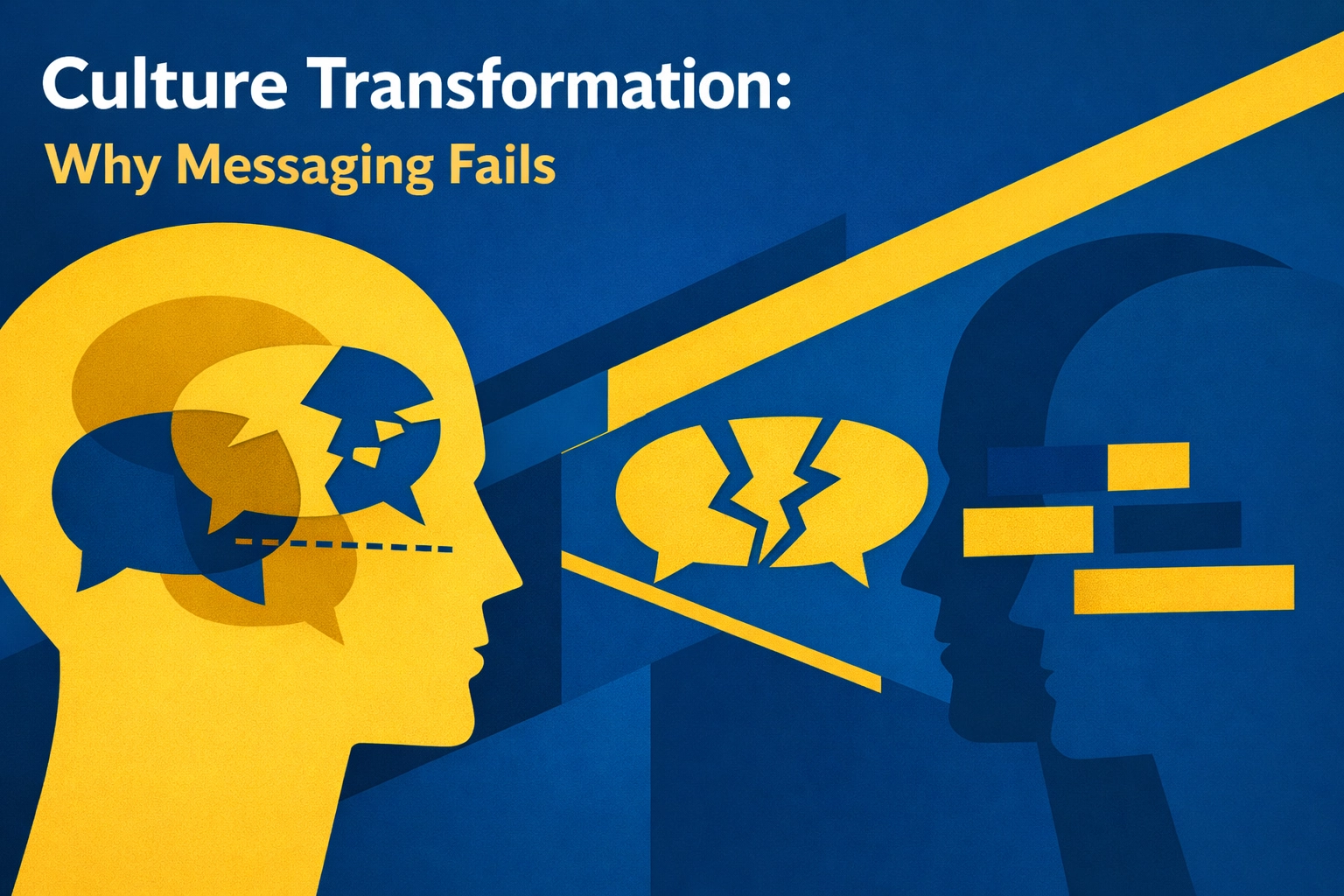
Culture Transformation: Why Messaging Fails
We’ve all seen the posters. "Integrity." "Innovation." "Agility." Usually printed in a clean, modern font over a stock photo of a mountain climber or a high-fiving team in a glass-walled conference room. As a Founder or a CHRO, you might have even been the one to approve the budget for those posters. Or the all-hands…
-
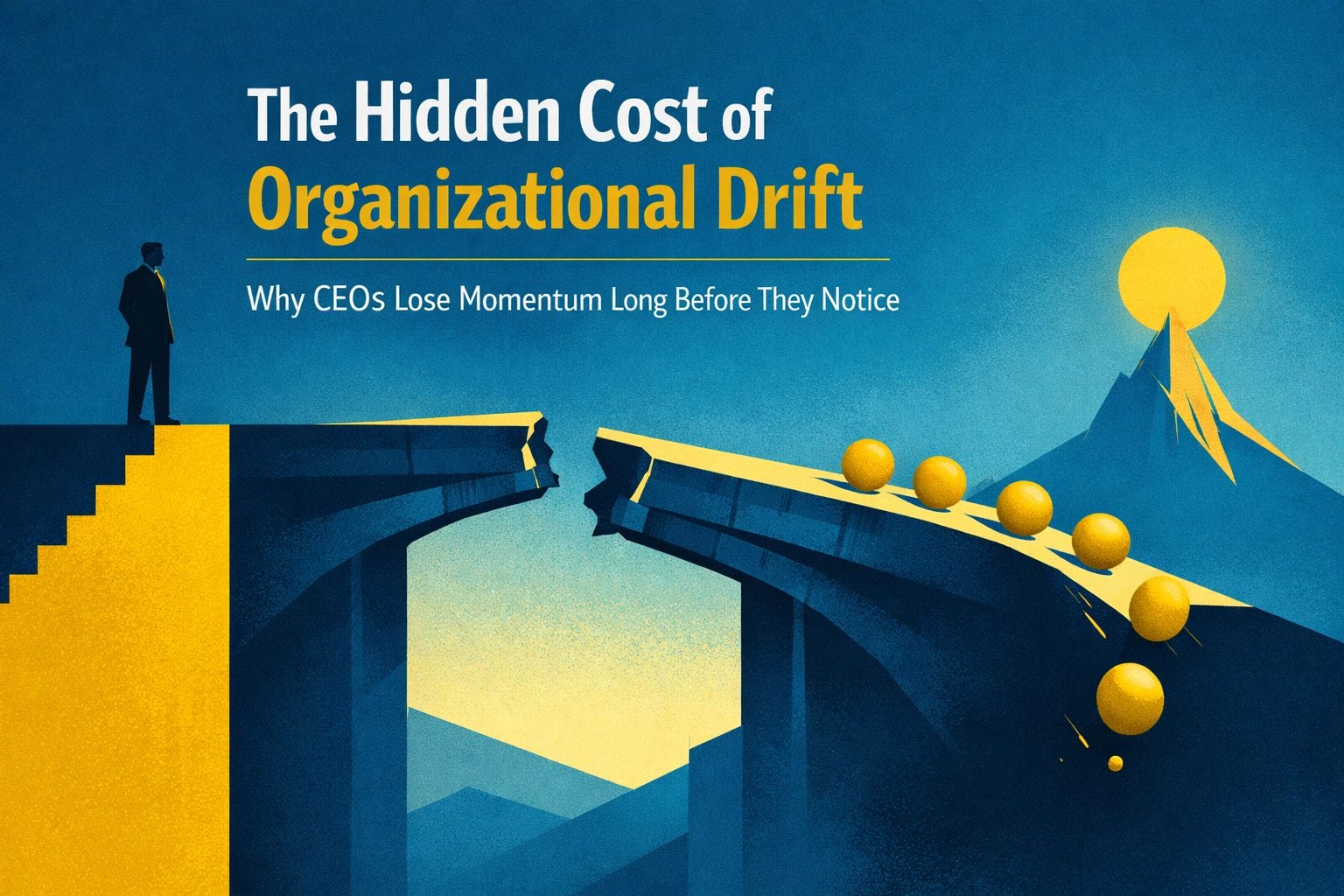
The Hidden Cost of Organizational Drift: Why CEOs Lose Momentum Long Before They Notice
It usually starts with a feeling in the gut rather than a red cell on a spreadsheet. You’re sitting in an executive committee meeting, and you realize you are having the exact same debate you had six weeks ago. The terminology is slightly different, and the slide deck has a fresh coat of paint, but…
-
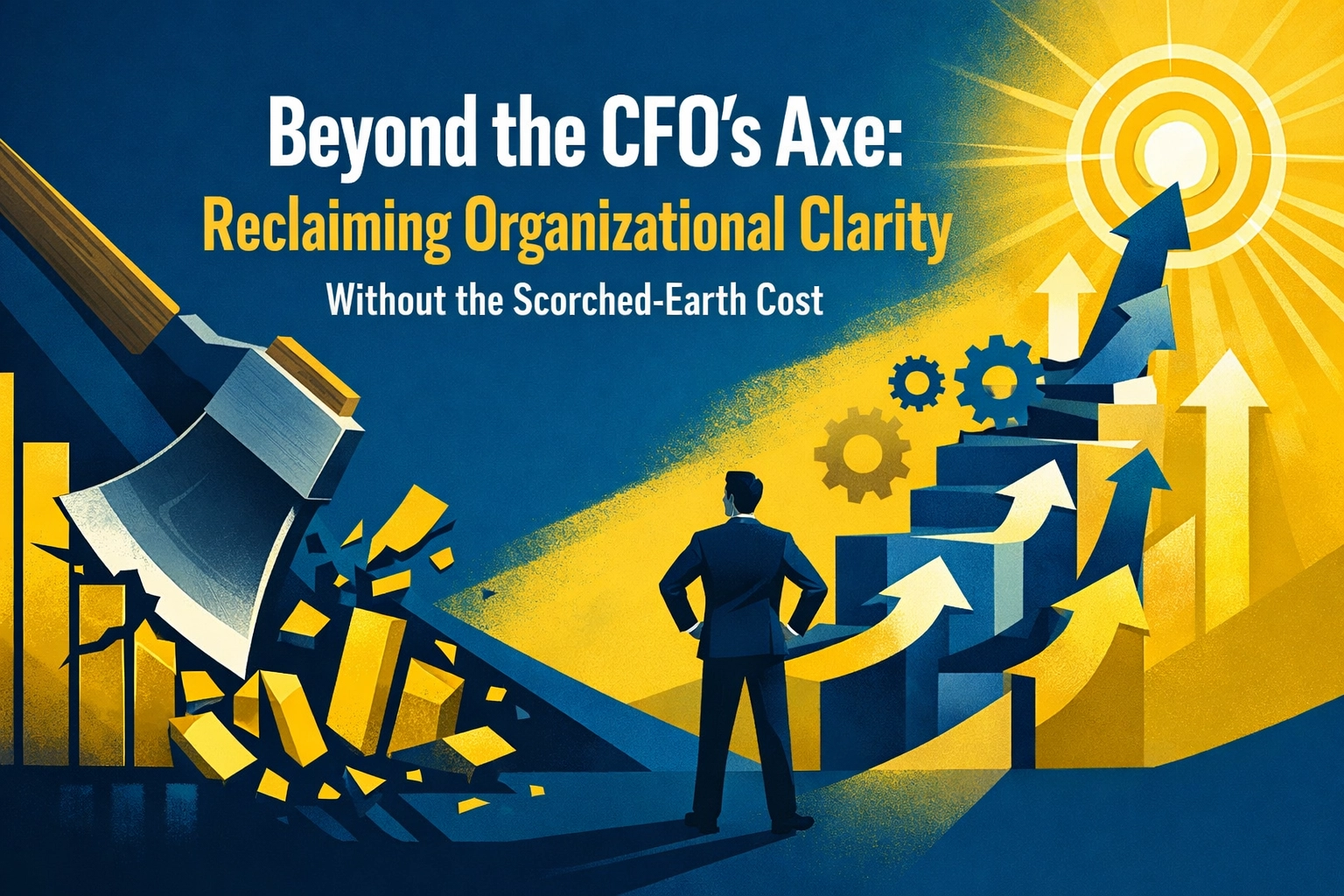
Beyond the CFO’s Axe: Reclaiming Organizational Clarity Without the Scorched-Earth Cost
Let’s be honest: when a growth-stage company hits a plateau or a Private Equity firm closes a mid-market deal, the first instinct is often to look for the "axe." We’ve all seen the play. The spreadsheets come out, the "non-essential" headcount is highlighted in red, and the CFO is tasked with finding 15-20% in savings…
-
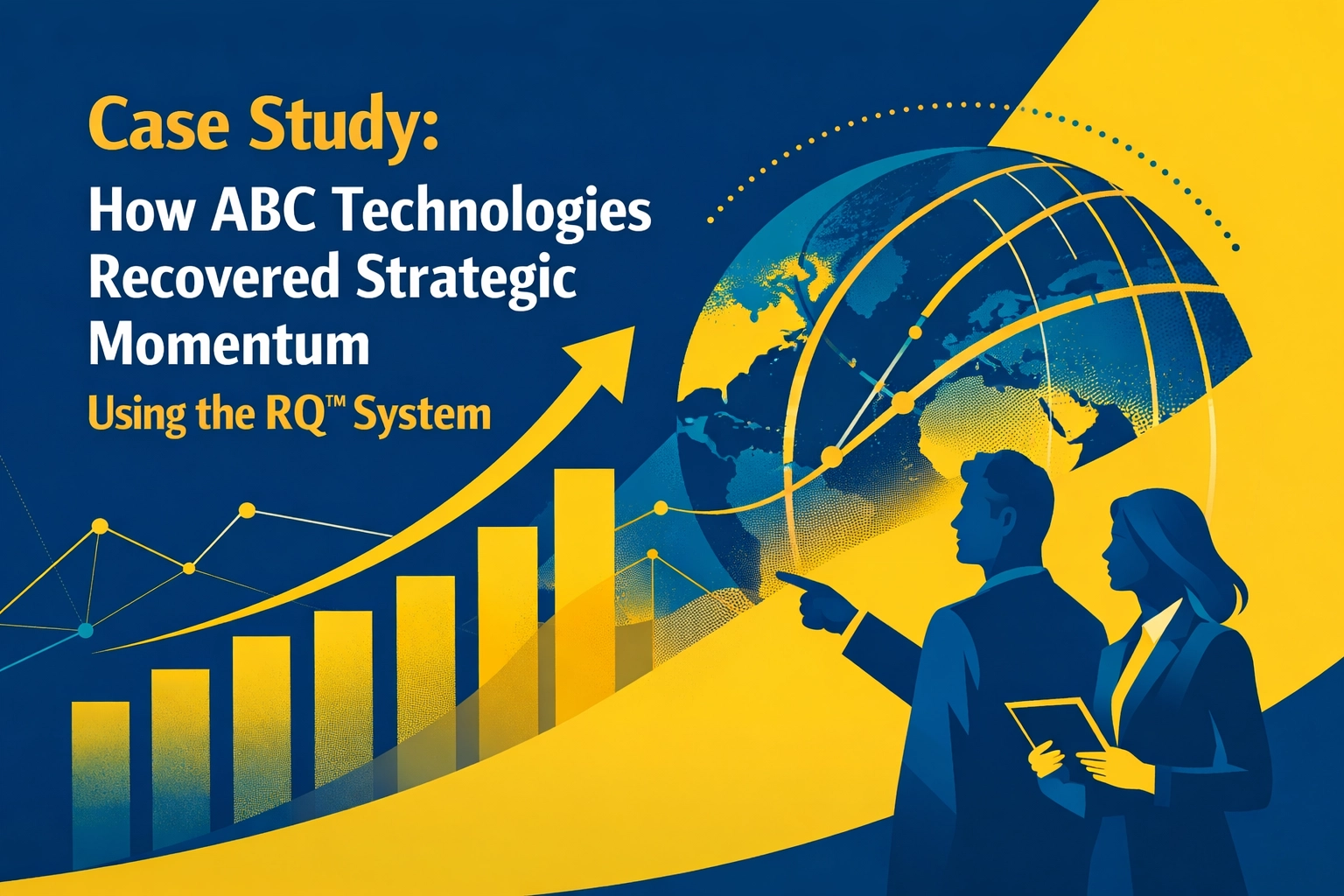
Case Study: How ABC Technologies Recovered Strategic Momentum Using the RQ™ System
In enterprise software, growth often looks like the cure for friction. In practice, rapid scaling can expose the structural cracks that slow execution. That widening gap between strategic intent and real execution capability is Organizational Drift. When ABC Technologies (not the company's real name), a $410M revenue enterprise software provider, reached out to Rinnovare, they…
-
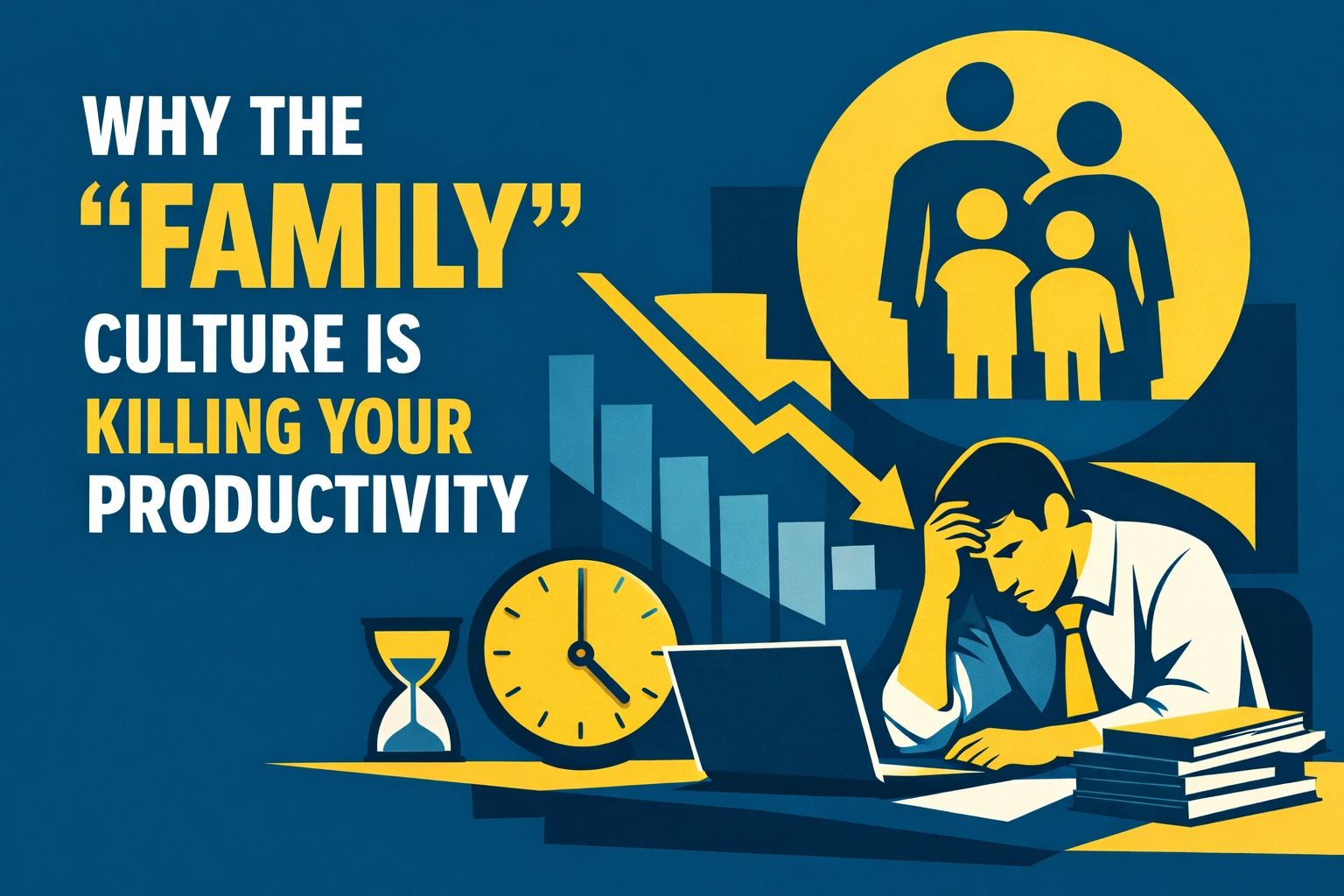
Why the “Family” Culture is Killing Your Productivity
If you’ve spent more than five minutes in a corporate town hall, you’ve heard it. The CEO stands up, hands in pockets, looking earnestly at the crowd, and says the words: "We aren’t just a company. We’re a family." It sounds warm. It sounds inclusive. It sounds like a great place to work. It’s also…
-
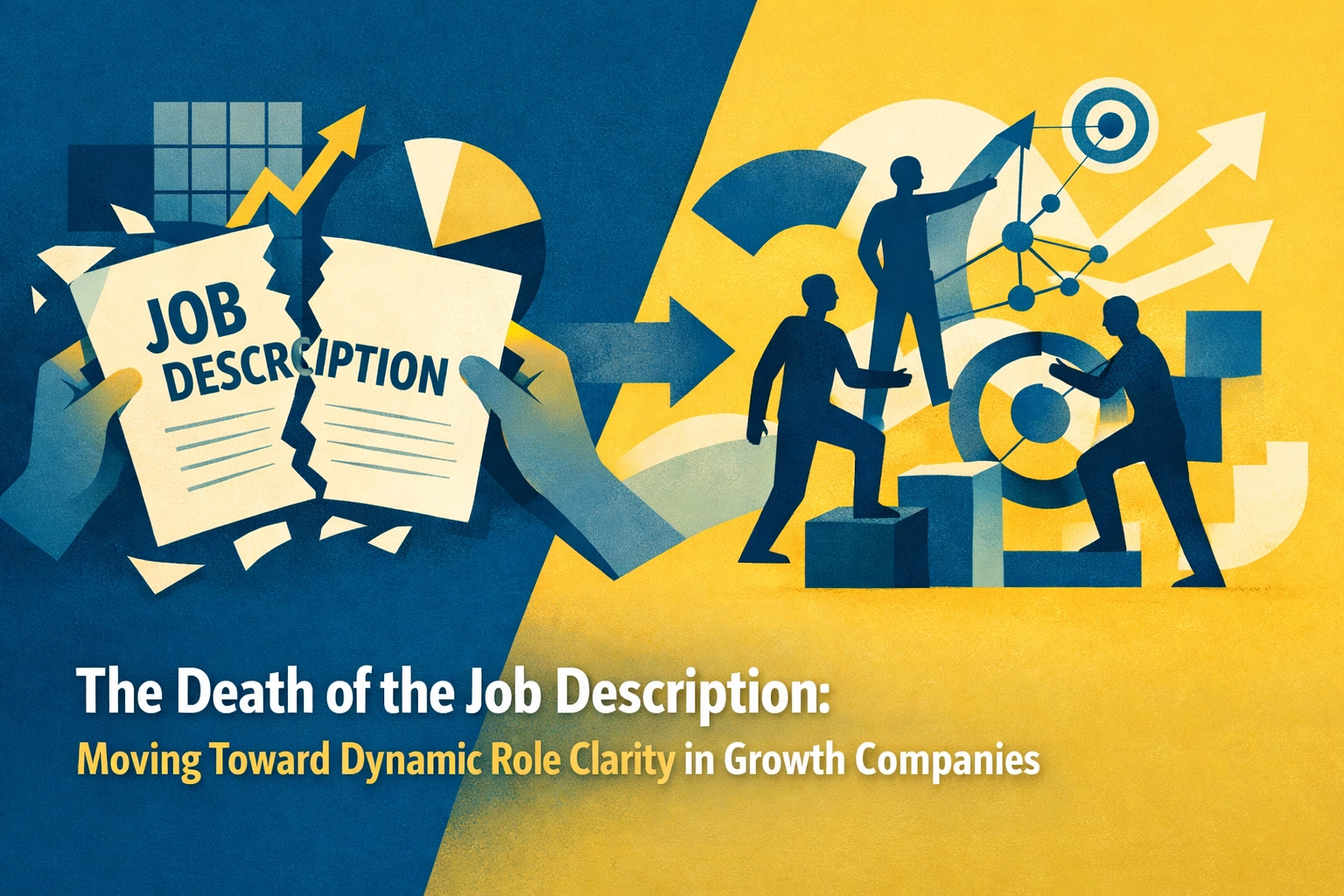
The Death of the Job Description: Moving Toward Dynamic Role Clarity in Growth Companies
Let’s be honest: when was the last time you looked at your own job description? If you’re a CEO or a CHRO in a high-growth environment, the answer is likely "the day I signed the offer letter." In the world of Private Equity-backed scale-ups and fast-moving enterprises, the traditional job description is effectively dead. It’s…
-
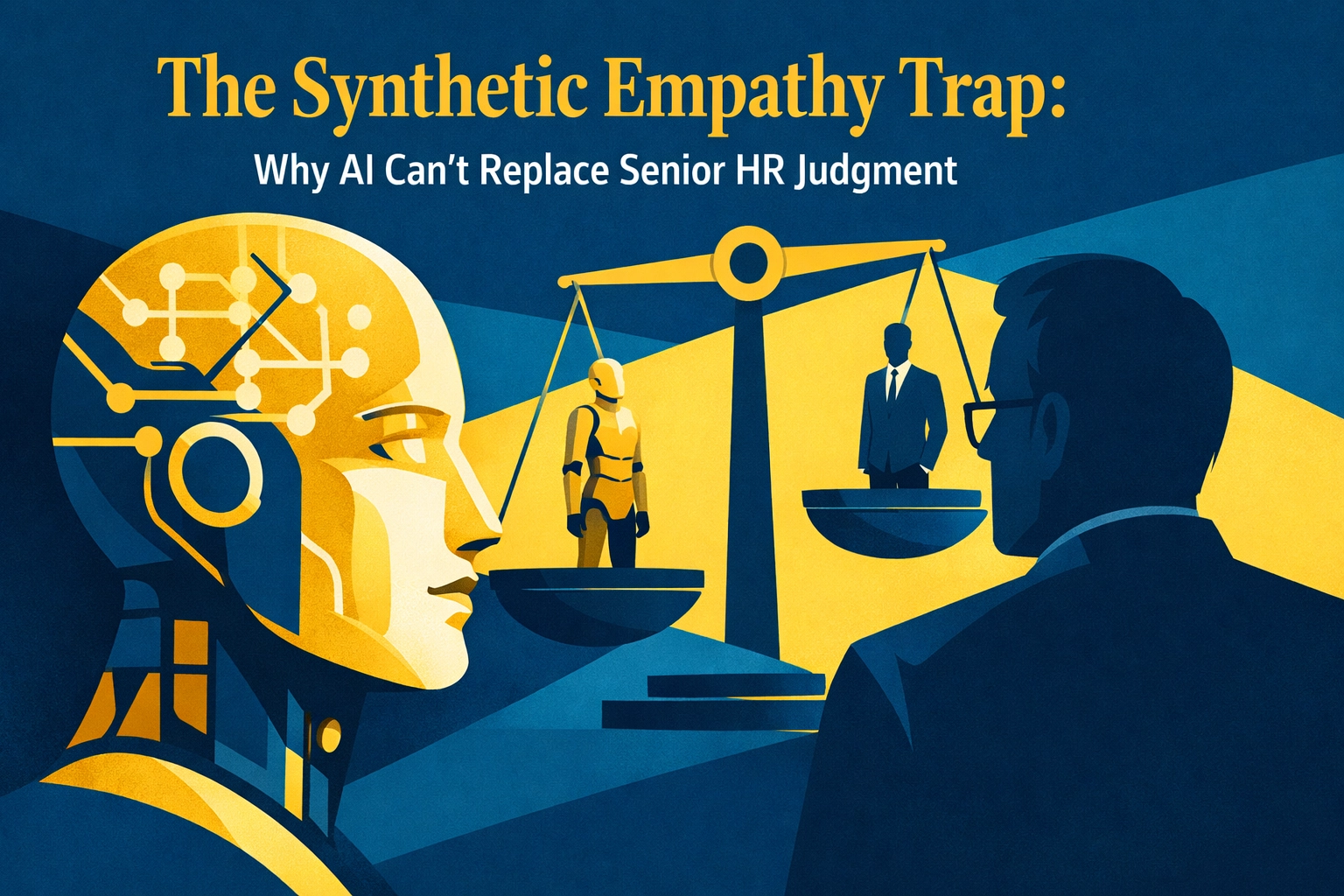
The Synthetic Empathy Trap: Why AI Can’t Replace Senior HR Judgment
The boardroom conversation has shifted. It used to be about "digital transformation" in a general sense: moving to the cloud, ERPs, and payroll automation. Today, the hype is narrower and more dangerous: the promise of AI-driven "empathy." We see it in the marketing decks of every new HR-tech startup. They promise AI chatbots that can…
-
HR Operating Model Redesign: The 5 Decisions That Actually Matter (And the 3 That Don’t)
Most HR operating model redesigns fail before they start. Not because the strategy is wrong. Not because the team lacks talent. But because executives spend six months debating things that don't move the needle while ignoring the five decisions that actually determine whether your HR function becomes a strategic lever or remains an expensive paper-pusher.…
-
HR Operating Model Redesign: Your Quick-Start Guide for PE-Backed Scale-Ups
You just closed the deal. Your portfolio company is at 300 employees. The growth plan calls for 800 by year two. And your current HR operating model? It's held together with spreadsheets, good intentions, and one exhausted HR Director who's already putting in 60-hour weeks. This isn't a people problem. It's a design problem. Nearly…
-
Culture Transformation Consulting in 2026: Why Messaging Fails and What Actually Works
The emails go out. The town halls happen. The values posters go up. And six months later, nothing has changed. If you're a CHRO or board member who's watched culture transformation initiatives sputter despite significant investment, you're not alone. The problem isn't your messaging strategy: it's the belief that messaging is the strategy. The Top-Down…
-
The Operating Cadence Audit: Stabilizing Leadership for High-Stakes Transitions
In the middle of a high-stakes transition, whether it’s a private equity carve-out, a post-merger integration, or a sudden CEO succession, leadership teams rarely suffer from a lack of effort. They suffer from a lack of rhythm. When the stakes are high, the natural human reaction is to do more. More meetings, more emails, more…
-
The Architecture of Accountability: Why Your New HR Tech Won’t Fix a Broken Org Design
Your $2 million HR tech stack isn't solving the problem. It's digitizing it. Every quarter, the pitch arrives: AI-powered performance management. Skills-based job architecture platforms. Predictive analytics dashboards. The promise is always the same, visibility, alignment, accountability. The reality? You're automating a broken operating model and calling it transformation. Here's what nobody in the vendor…
-
Silence of the Boardroom: When Executive Misalignment Becomes a Hard Liability
Walk into any high-stakes boardroom, and you’ll see the same ritual. The slides are crisp. The EBITDA projections are aggressive. The CAPEX strategy is mapped out to the third decimal point. But there is often a deafening silence regarding the one variable that actually determines whether those slides become reality: the alignment of the people…
-
The Drift Tax: Measuring Value with the Renewal Quotient (RQ™)
In the high-stakes environment of Private Equity and growth-stage leadership, the greatest threat to enterprise value is rarely a competitor or a market shift. It is a silent, internal erosion of momentum known as the Drift Tax. The Drift Tax is the cumulative cost of leadership misalignment, cultural incoherence, and operational ambiguity. It’s what happens…
-
The Moral Obligation to Fire: Why Keeping Underperformers is Leadership Malpractice
You think you’re being a "good person." You’ve got a VP or a Director who just isn't hitting the mark. Maybe they’re well-liked. Maybe they’ve been with the company since the early days. Maybe they’re just "going through a rough patch" that has somehow lasted eighteen months. So, you wait. You coach. You "give them…
-
Does Your Executive Team Need a CHRO, or a Therapist? The Truth About Leadership Alignment
I've been in enough boardrooms to know when I'm watching a breakdown in real time. The CFO is running a parallel analysis because she doesn't trust the COO's numbers. The Chief Product Officer is building roadmaps in isolation because the CRO "doesn't get it." And the CEO? The CEO is spending 60% of their week…
-
The CHRO’s AI Dilemma: How to Close the ROI Gap Without Losing Your Team’s Trust
Your board wants ROI. Your CEO wants efficiency. Your employees want job security. And you're stuck in the middle with a technology you didn't ask for, a timeline you didn't set, and a workforce that's reading the same dystopian headlines you are. Welcome to the CHRO's AI dilemma. It's not about whether to integrate AI:…
-
Organizational Design Consulting 101: A Growth CEO’s Guide to Fixing Alignment Without Blowing Up Your Culture
You've scaled past 150 people. Your leadership team is talented. Your strategy is solid. But something's breaking. Decisions take forever. People are stepping on each other's toes: or worse, critical work is falling through the cracks because no one's sure who owns it. Your best leaders are exhausted trying to hold things together with sheer…