Author: Philip Curran
-
The Strategy Gap: Why Most Companies Still Operate Without a Real People Strategy
—
by
Most mid-market organizations operate with a sophisticated business strategy but lack a corresponding people strategy. This disconnect is not a tactical HR oversight; it is a structural failure that creates executive drift and erodes enterprise value. The Invisible Architect In companies with 150 to 1,500 employees, the complexity of the human system often outpaces the…
-

The Leadership Audit: A 6-Point Framework for Diagnosing Executive Teams
—
by
High-performing executive teams often operate under the illusion of alignment. Beneath the surface, unspoken frictions and structural gaps quietly erode enterprise value. A rigorous leadership audit reveals these hidden risks before they manifest as operational failure. When an organization fails to meet its growth targets or experiences a stall in transformation, the reflex is to…
-

The Hospital CEO’s Quiet Crisis: Decision Fatigue at Scale
—
by
Hospital CEOs manage one of the most complex organizational structures in the modern economy. The role demands a constant reconciliation of clinical excellence, financial viability, and regulatory compliance. When the volume of high-stakes choices exceeds cognitive capacity, the result is decision fatigue at scale. This is not a personal failure of stamina. It is a…
-

The Founder’s Burden: Why Visionaries Struggle With Leadership Infrastructure
—
by
Growth-stage CEOs often reach a point where the very intuition that built the company begins to stifle it. This transition from visionary founder to institutional leader is rarely a matter of effort; it is a matter of infrastructure. The Intuition Trap In the early stages of a venture, the founder is the central processing unit.…
-

RQ™ Diagnostic: Measuring the Reliability of a Leadership System
—
by
Organizational performance is not the output of personality, effort, or engagement. It is the product of a leadership architecture. When that architecture degrades, the organization enters a measurable state of value erosion known as Organizational Drift. The RQ™ Diagnostic provides the structural baseline for assessing the Renewal Quotient (RQ™) of a leadership system. Unlike engagement…
-
The CHRO’s New Mandate: Architecting Leadership, Not Administering HR
—
by
The CHRO’s New Mandate: Architecting Leadership, Not Administering HR As a former CHRO, it pains me to admit this: in 95% of companies, the traditional definition of the role is quietly becoming a liability. When the CHRO is confined to administrative oversight and compliance, the organization loses its primary architect of leadership alignment and cultural…
-
The 500-Bed Threshold: Why Scale Breaks Leadership Patterns
—
by
Growth in healthcare is rarely a linear progression of efficiency. It is a series of phase shifts that demand fundamental changes in how an organization is led. For many hospital systems and large medical groups, the most significant fracture occurs at the 500-bed threshold. At this scale, the personal influence of a CEO or a…
-
The Architecture of Renewal: Beyond Crisis Management
—
by
Reputational damage is rarely what it appears to be. Most leaders, boards, and communications teams treat it as a public relations crisis — a problem of narrative, messaging, and optics. That framing is not just incomplete. It is a structural error that guarantees incomplete recovery. Reputational damage is a leadership system failure made visible. The…
-
The PE Playbook Is Broken: Why Value Creation Needs a Leadership OS
—
by
The traditional private equity model of multiple arbitrage and aggressive financial engineering has reached a structural limit. In an environment defined by higher capital costs and stagnant exit markets, value creation now requires a Leadership OS that can drive genuine operational alpha. The Exhaustion of Financial Engineering For decades, the private equity playbook was predictable.…
-
Private Equity’s Blind Spot: The Leadership Drag on Value Creation
—
by
Private equity remains anchored in the mechanics of the balance sheet. While financial engineering provides the floor for value creation, the ceiling is dictated by the strength of the leadership architecture. The most sophisticated investment thesis will fail if the human system beneath it cannot execute. This is the primary blind spot in modern private…
-

Healthcare’s Hidden Operating System: The Leadership Patterns That Predict Failure
—
by
Most healthcare turnarounds are declared successful based on short-term financial recovery. Within twenty-four months, these same organizations often regress, losing the gains they fought to achieve. The failure is rarely due to a lack of clinical expertise or financial acumen; it is a failure to diagnose the underlying leadership patterns that dictate organizational behavior. In…
-

The CHRO as the Last Strategic Adult in the Room
—
by
In the high-stakes environment of the executive suite, speed is often mistaken for progress. Founders push for growth. Private equity partners push for margins. In the rush to scale or exit, the organizational fabric often begins to tear under the weight of unmanaged expectations and structural ambiguity. The Chief Human Resources Officer (CHRO) frequently finds…
-

Private Equity’s Blind Spot: The Human Capital Drag on Value Creation
—
by
Executive Summary Private equity often applies precision to the past and intuition to the future. Financial diligence captures historical performance, but leadership architecture determines whether the investment thesis can actually be executed at scale. When the leadership system is misaligned with the next stage of complexity, the business begins paying a Drift Tax™ that constrains…
-
Healthcare’s Hidden Operating System: The Leadership Patterns That Predict Failure
—
by
Author: Philip CurranDate: Thursday, May 7, 2026 Executive Summary Healthcare leadership is carrying a problem it still tends to misname. The failure is architectural, not behavioral. Despite rigorous selection processes, 40–50% of new healthcare executives fail within their first 18 months, usually because advancement has outpaced leadership growth and the system around them was never…
-
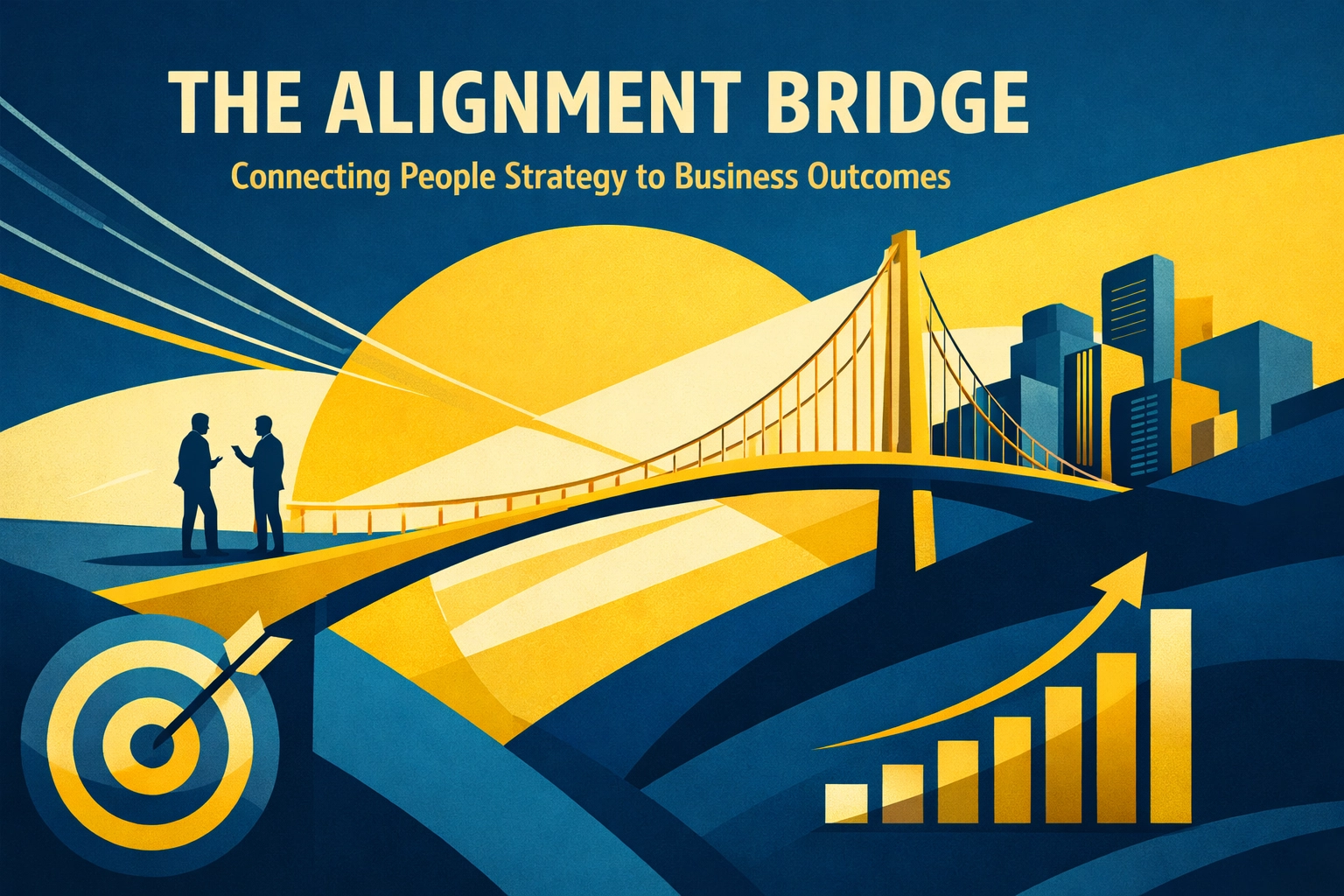
The Alignment Bridge: Connecting People Strategy to Business Outcomes
—
by
"People are our greatest asset." If I had a dollar for every time I saw that phrase in an annual report or heard it in a boardroom, I’d probably be retired on a beach in Sicily right now. But here’s the reality: while most leaders say it, very few actually manage their business as if…
-
The Hidden Cost of Organizational Drift
—
by
Executive Summary Organizational drift is the quiet separation between what leaders say matters and what the business actually does. It shows up as the Drift Tax™: slower decisions, duplicated work, and avoidable friction that erodes enterprise value. The issue is rarely culture first. It is usually leadership architecture: unclear priorities, blurred decision rights, and a…
-

The Leadership Delta: Why CEOs Overestimate Their Bench Strength
—
by
Executive Summary The Leadership Delta is the moment when an executive’s personal capability no longer matches the architectural capacity required to lead the organization into its next era. When this divergence goes unrecognized, the business absorbs a Drift Tax™—a measurable slowdown in decision velocity, alignment, and enterprise value creation. Closing this gap requires a shift…
-

The Hidden Tax of Elegance: Why European Leadership Styles Collapse Under U.S. Operating Pressure
—
by
Primary Category: Cross-Border LeadershipSecondary Category: Organizational Drift The Moment That Matters Leadership style does not travel. Operating systems do — and most fail on arrival. A European leadership model entering the U.S. market without a rewired operating system breaks under load. The failure is not cultural. It is structural. Elegance becomes drag. Drag becomes delay.…
-
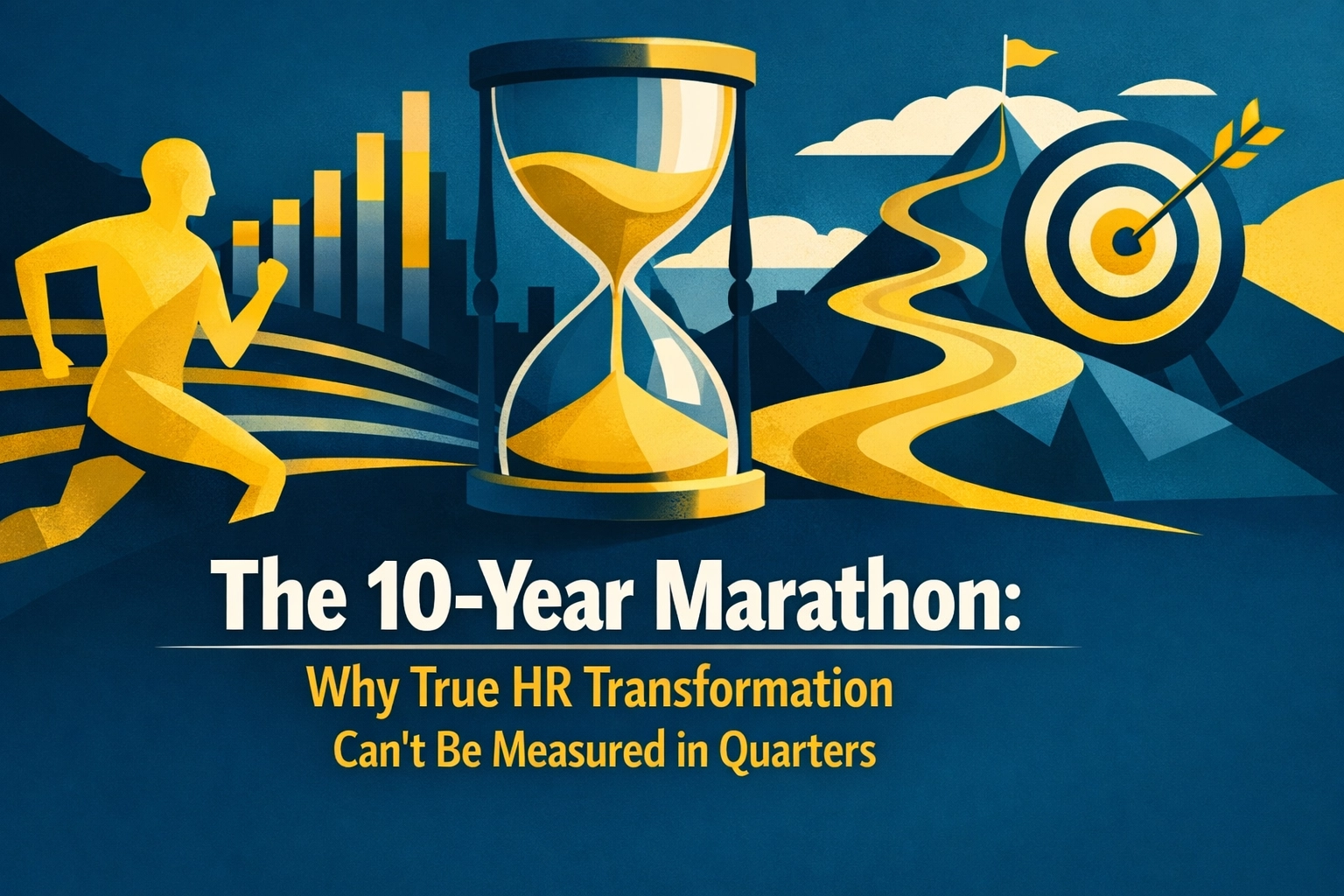
The 10-Year Marathon: Why True HR Transformation Can’t Be Measured in Quarters
—
by
In the world of Private Equity and large-scale Enterprise, we are obsessed with the "sprint." We live for the 100-day plan, the quarterly earnings call, and the rapid-fire exit strategy. We want results, and we want them yesterday. But there’s a fundamental disconnect when it comes to the "People" side of the equation. You can…
-

Is Your CHRO a Force Multiplier or a Drag on the Business? A CEO’s No-Nonsense Evaluation Guide
—
by
Primary Category: CEO AdvisorySecondary Category: Enterprise Value The Loyalty Trap CEOs mistake loyalty for capability — and the business pays for it. A "trusted advisor" who manages administrative friction but fails to architect the leadership system is a silent tax on the organization. This failure creates structural drag on the enterprise multiple. The cost of…