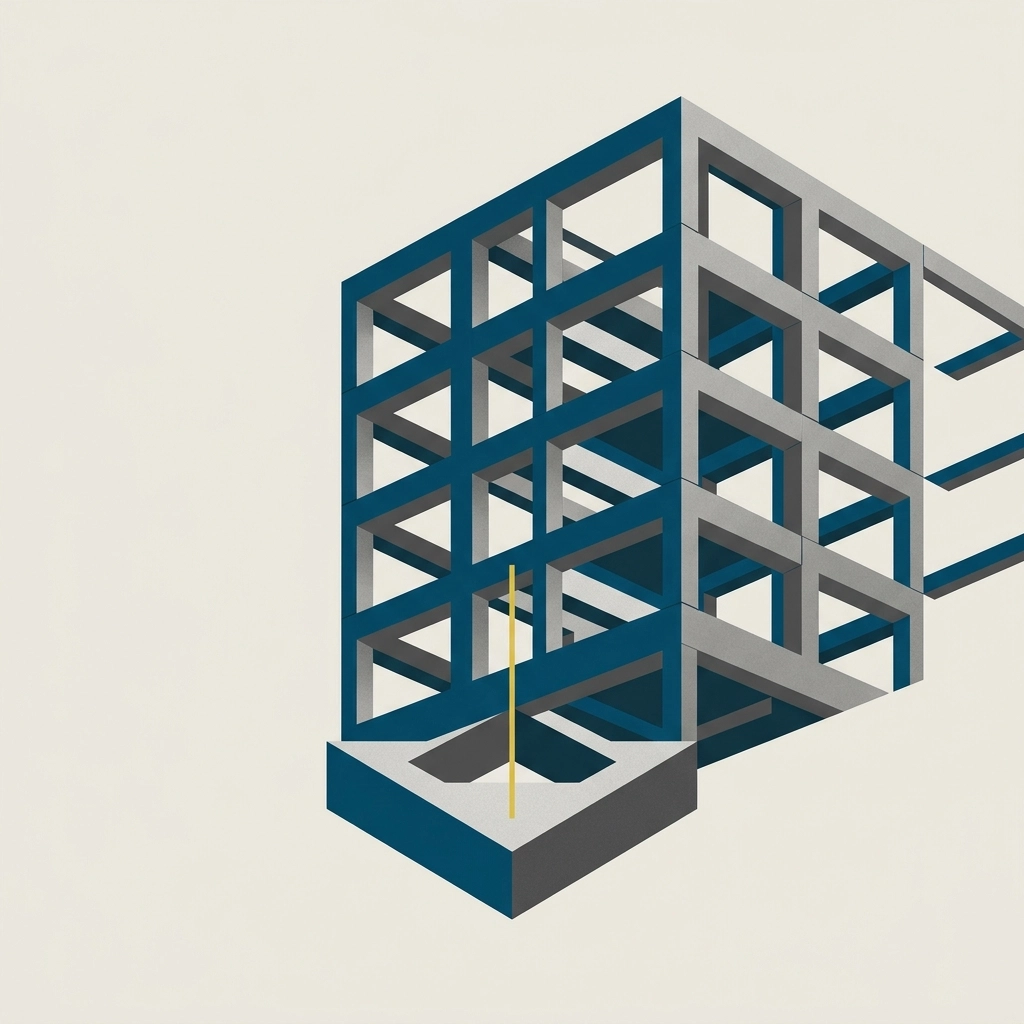
Organizational performance is not the output of personality, effort, or engagement. It is the product of a leadership architecture.
When that architecture degrades, the organization enters a measurable state of value erosion known as Organizational Drift.
The RQ™ Diagnostic provides the structural baseline for assessing the Renewal Quotient (RQ™) of a leadership system. Unlike engagement surveys—which measure sentiment—the RQ™ Diagnostic measures reliability: the probability that the organization will execute its stated strategy without intervention.
The Diagnostic Insight: Reliability Over Sentiment
Most executive teams misdiagnose their performance issues as “culture problems.”
In reality, culture is often a lagging indicator of a deeper structural failure.
A team can be highly engaged while operating inside a leadership system that guarantees inconsistent execution. The RQ™ Diagnostic treats the leadership team as an operating system, not a collection of personalities. When reliability drops, the Drift Tax™ rises—manifesting as re‑litigated decisions, shadow hierarchies, and execution drag.
The diagnostic is built on a structured sequence of analysis that converts qualitative reality and structural evidence into a quantified reliability score.
Layer 1: Perceptive Reality
The diagnostic begins with the lived experience of the leadership team.
Through executive interviews and behavioral anchor scoring, we identify:
- Where leaders lack clarity
- Where decision rights are ambiguous
- Where strategy is interpreted through personal filters
- Where friction accumulates in the seams of the organization
This converts subjective experience (not opinion) into directional data tied to the 20 sub‑dimensions of the RQ™ System.
Layer 2: Structural Evidence
Next, we analyze the organization’s operating model:
- Decision logs
- Operating cadence artifacts
- Role charters
- Cross-functional workflows
- Performance and variance data
The goal is to identify structural bottlenecks—the places where the system consistently fails to deliver, regardless of who occupies the role.
If 40% of executive meeting time is spent revisiting prior decisions, that is not a behavioral issue. It is a structural failure in decision rights and operating rhythm.
Layer 3: The RQ™ Scoring Engine
The RQ™ Scoring Engine integrates perceptive reality and structural evidence across:
- 5 Dimensions
- 20 Sub‑dimensions
The output is the RQ™ Index (0–100), a reliability score that reflects the health of the leadership system.
- RQ > 75 → High reliability, scalable execution
- RQ 65–75 → Moderate reliability, inconsistent execution
- RQ < 65 → High Drift Tax™, elevated execution risk
The scoring engine reveals exactly where the system is robust and where it is brittle.
Layer 4: Drift Tax™ Modeling
Once the RQ™ Index is established, we quantify the financial and operational impact through the four canonical Drift Tax™ patterns:
- Decision Drift — delayed, reversed, or ignored decisions
- Accountability Friction — unclear ownership and leadership bystander effects
- Coordination Drag — cross-functional breakdowns at seams and interfaces
- Operating Rhythm Breakdown — a cadence that cannot keep pace with the market
This converts “soft” leadership issues into “hard” dollar impact.
Layer 5: Severity Map + RQ™ Roadmap
The final output is the Severity Map, which prioritizes reliability risks based on their proximity to enterprise value. This identifies the leverage points—the 20% of structural interventions that will produce 80% of the improvement.
The RQ™ Roadmap then outlines the sequence of structural resets required to restore reliability:
- Decision rights
- Operating cadence
- Leadership alignment
- Cross-functional coordination
- Accountability architecture
This is not a list of best practices. It is a targeted strike plan.
Practical Implications for the C‑Suite
For CEOs, the RQ™ Diagnostic replaces intuition with structural clarity:
“We don’t have a culture problem. We have a 22% Drift Tax™ driven by decision drift in our Western region.”
For Private Equity partners, it provides a reliability assessment that traditional diligence misses—revealing the leadership system’s capacity to execute the value‑creation plan.
Rinnovare differentiates by addressing both:
- The Structural Layer (RQ™ System)
- The Emotional Layer (The Hidden Emotional Contract™)
A perfect operating model will fail without trust.
A high‑trust team will burn out inside a broken structure.
The RQ™ Diagnostic provides the baseline for both.
The Next Step
If you are navigating a high‑stakes transition—post‑merger integration, leadership succession, or rapid scaling—your greatest risk is not the market. It is the unmeasured Drift Tax™ inside your leadership system.
The path to reliability begins with a diagnostic that examines the system, not the people.

Categories:
- Organizational Drift
Leave a Reply