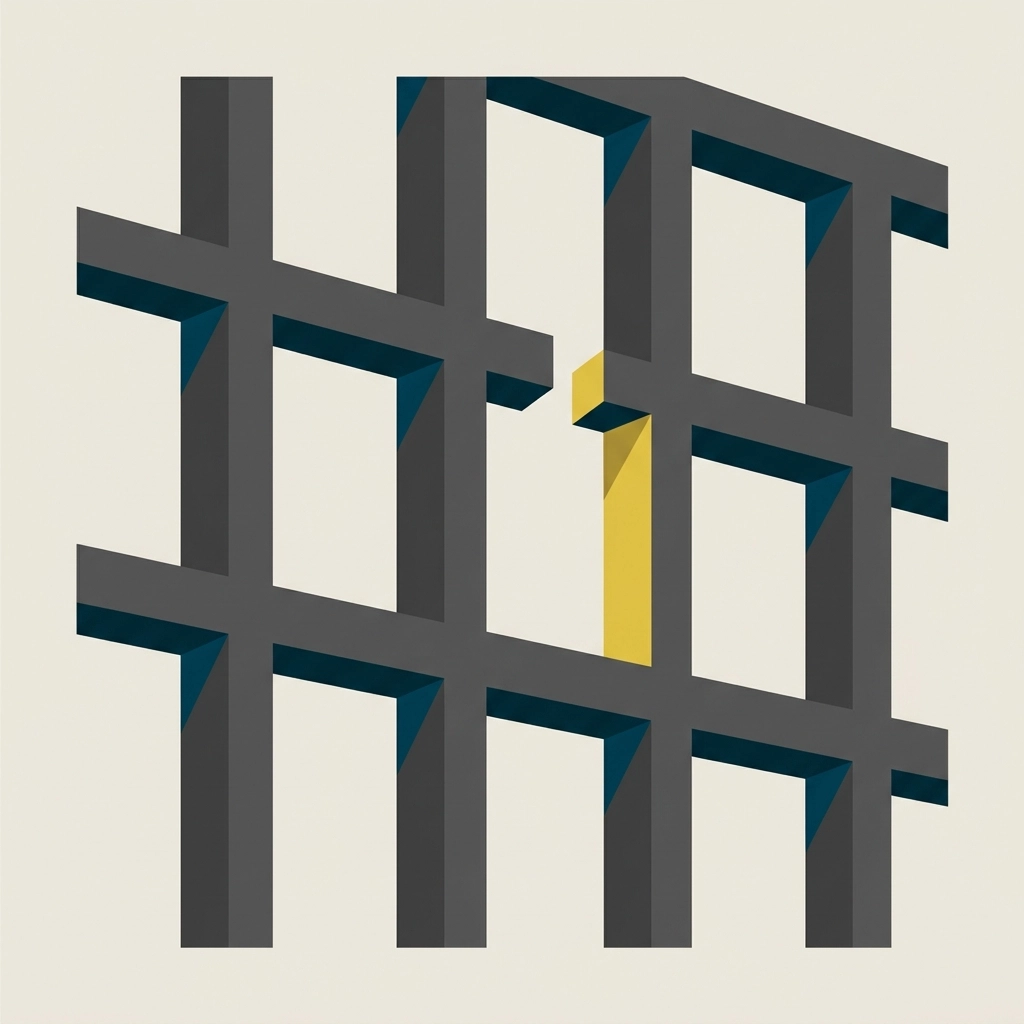
Most mid-market organizations operate with a sophisticated business strategy but lack a corresponding people strategy. This disconnect is not a tactical HR oversight; it is a structural failure that creates executive drift and erodes enterprise value.
The Invisible Architect
In companies with 150 to 1,500 employees, the complexity of the human system often outpaces the maturity of the operating model. The CEO and the board focus on the P&L, market share, and capital allocation. They treat "people" as a line item to be managed by an HR function focused on compliance, benefits, and payroll.
This is a category error.
A business strategy defines where a company is going. A people strategy defines the organizational physics required to get there. Without a real people strategy, the organization suffers from a "Strategy Gap": a void where execution slows down, decision-making becomes opaque, and the best talent begins to disengage.
At Rinnovare, we view this gap as a massive business risk. It is the primary driver of what we call the Drift Tax™. This is the quantifiable cost of misalignment, where the energy of the leadership team is spent correcting misunderstandings rather than driving growth.

Why Tactical HR is Not a People Strategy
Most executives mistake HR activities for a people strategy. Training programs, engagement surveys, and competitive benefits packages are necessary, but they are tactical. They do not address the fundamental alignment between the enterprise's goals and the human system’s capacity to achieve them.
A real people strategy is architectural. It asks diagnostic questions that tactical HR ignores:
- Does our organizational structure support our three-year growth targets, or are we still built for the company we were two years ago?
- Are decision rights clearly defined, or does every significant choice require a "shadow meeting" to gain consensus?
- Is our leadership team aligned on the talent philosophy required to scale, or is every executive hiring based on their own subjective criteria?
When these questions remain unanswered, the organization enters a state of "Executive Drift." Leaders agree on a direction in the boardroom, but their departments move in slightly different vectors. Over time, these small deviations create a massive gap in execution. This is value leakage in its purest form.
The Physics of Enterprise Value
For Private Equity partners and growth-stage CEOs, people strategy is the source code of enterprise value. In a transaction or a scale-up phase, the human system is the primary engine of the investment thesis. If that engine is misaligned, the thesis fails.
We ground our work in the Rinnovare Three-Layer Stack. To close the Strategy Gap, a leader must address three distinct levels of the organization simultaneously:
- The Structural Layer (The Hard System): This is the RQ™ System. It involves the RQ™ Operating Model, which defines the leadership rhythm, decision rights, and accountability frameworks. If the structure is broken, even the best people will fail.
- The Emotional Layer (The Soft System): This is governed by The Hidden Emotional Contract™. Every employee has an unwritten set of expectations regarding trust, dignity, fairness, and meaning. When a company ignores this layer, culture sours and retention drops.
- The Application Layer: This is where the work happens: Interim CHRO advisory, HR transformation, and CEO coaching. It is the practical deployment of the first two layers to stabilize the system and drive performance.

The Moral Obligation of Leadership
Leadership is more than the stewardship of capital; it is a moral obligation to elevate people. When a company operates without a people strategy, it fails its employees. It creates an environment of ambiguity and frustration where high performers feel stifled and low performers are allowed to linger.
Strengthening culture is not about "perks." It is about providing a clear, disciplined environment where people know how they contribute to a larger mission. A real people strategy provides the clarity that allows individuals to flourish. This is where high performance meets human dignity.
When the structural layer (RQ™) and the emotional layer (The Hidden Emotional Contract™) are in harmony, the organization gains a competitive advantage that is difficult for competitors to replicate. This is not "soft" work; it is the hardest work a CEO will ever do.
Diagnostic Signals: Is Your Company at Risk?
The Strategy Gap is often invisible until it becomes a crisis. However, there are diagnostic signals that indicate your leadership system is quietly destroying enterprise value. We call these the RQ™ Diagnostic signals:
- Re-litigation: Decisions that were supposedly "final" are constantly reopened and debated in smaller groups.
- Shadow Decisions: The real work and real choices happen in the hallways or private messages, not in the official leadership cadence.
- Role Ambiguity: Executives are unsure of where their authority ends and another's begins, leading to either paralysis or turf wars.
- The Drift Tax™: Projects take longer than planned, not because of technical hurdles, but because of internal friction and misalignment.
If these patterns are present, the Strategy Gap is widening. The cost is not just financial; it is the erosion of trust across the entire enterprise.

Closing the Gap
Closing the Strategy Gap requires a shift in perspective. The CEO must stop viewing people as a function to be managed and start viewing the human system as a strategic asset to be engineered.
This begins with an RQ™ Diagnostic. This process uncovers the structural and emotional misalignments that are holding the company back. Once the gaps are identified, the RQ™ Roadmap provides the sequence of interventions required to align the organization with its business strategy.
This is not a quick fix. It is a disciplined approach to building a resilient, high-performing enterprise. It requires a commitment to senior judgment, discretion, and no-nonsense execution.
The Path Forward
The Strategy Gap is the difference between a company that survives and one that dominates its market. For mid-market and growth-stage companies, the stakes are too high to leave the human system to chance.
A real people strategy is the bridge between ambition and reality. It is the framework that turns a business plan into a living, breathing, and profitable organization.
If you are a CEO or a Private Equity partner navigating a moment of transition, expansion, or stagnation, the Strategy Gap is likely your greatest hidden risk. Addressing it is the only way to ensure sustained performance and long-term enterprise value.

If you are navigating the complexities of organizational drift or leadership misalignment, reach out for a 30-minute clarity call to discuss how the RQ™ System can protect and enhance your enterprise value.
Primary Category: Organizational Drift
Secondary Category: Enterprise Value

Leave a Reply