Primary Category: Organizational Drift
Secondary Category: CEO Advisory
The Moment That Matters: The Meeting After the Meeting
You’ve just walked out of a ninety-minute executive session. On the surface, it was productive. Everyone nodded. No one raised their voice. The slide deck was polished, and the "alignment" seemed total.
But as the elevator doors close, the real meeting begins. Two VPs huddle in the hallway to discuss why the new strategy will never work. The CFO sends a "just between us" Slack message questioning the headcount assumptions. The "agreed-upon" plan starts to dissolve before the ink is dry.
This is the sound of "Nice" killing your enterprise value.
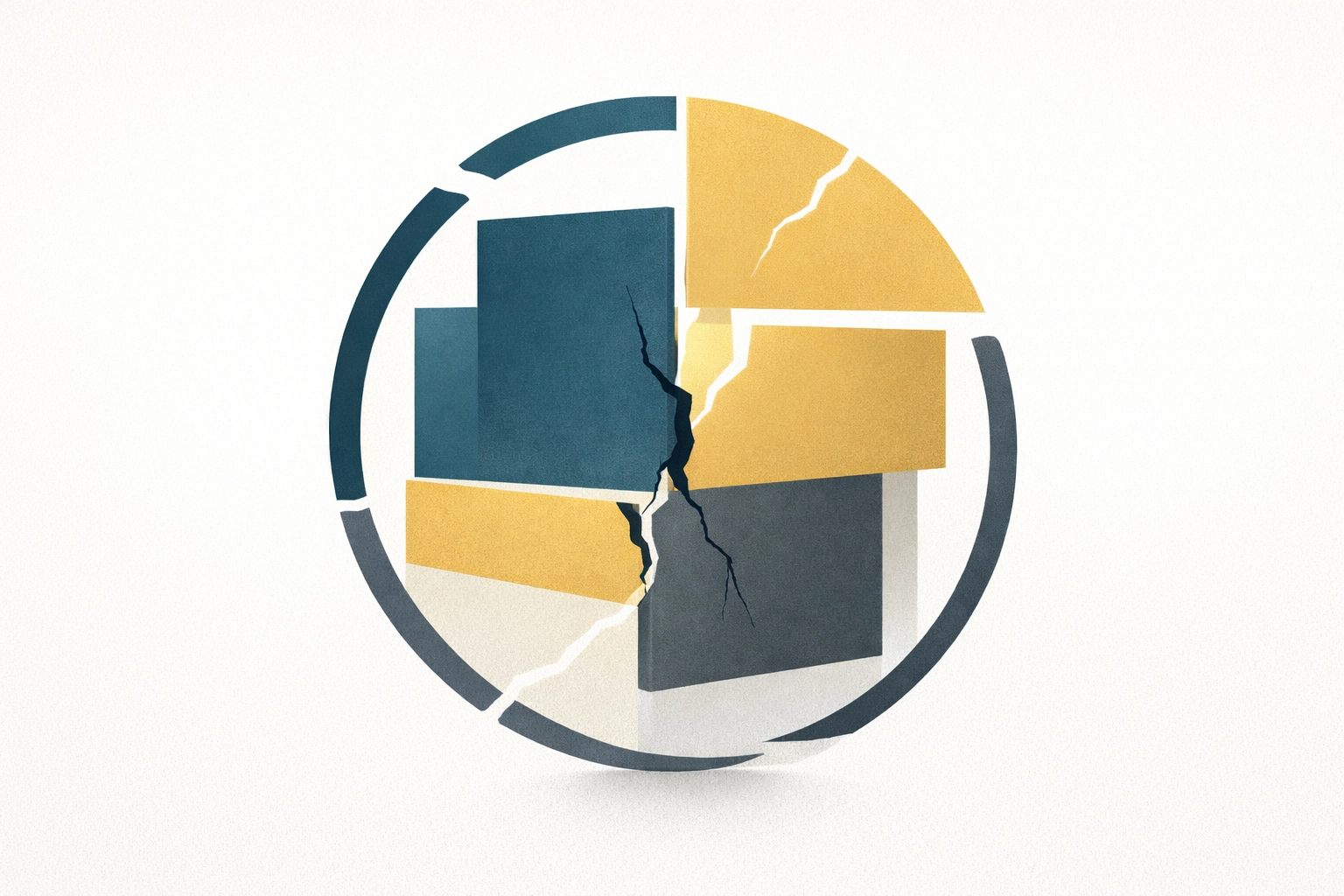
In many high-growth and Private Equity-backed companies, there is a pervasive, unspoken agreement to avoid discomfort. We call this conflict-aversion, but it’s actually a form of debt. And like any debt, it carries a heavy interest rate. At Rinnovare, we call this the Drift Tax™. It is the invisible drain on your resources, time, and talent that occurs when the "hard things" are left unsaid.
The Pendulum of a Leader: My Personal Journey
I didn’t learn how to navigate conflict in a corporate boardroom. I learned it at the dinner table.
I grew up in a "don’t talk about it" family. If there was a problem, we didn’t address it head-on; we ignored it, smoothed it over, or waited for it to dissipate. We were, by all accounts, a "nice" family. When I entered the workforce, I took that blueprint with me. I was the leader who prioritized harmony above all else. I thought I was being nice, but I was actually building a vacuum where accountability went to die.
Eventually, the pressure of unaddressed issues became unsustainable. I realized that my "niceness" was failing the organization. But when I tried to fix it, I did what many leaders do: like a pendulum, I swung too far in the opposite direction.
I thought that to be "not avoidant," I had to be "confrontational." I blew it. Totally. I alienated members of my team and imperiled team performance/results. Seriously, it took years of trial, error, and deep reflection to find the balance point: the "Middle Way" where high-challenge meets high-support.
Finding that balance isn't just a personal growth milestone; it is a critical institutional requirement. If you, as a leader, cannot model healthy conflict, your entire operating model will drift into dysfunction.

Description: A visual representation of the Leadership Pendulum: On one end, "Conflict Avoidance" (The Drift Tax), on the other, "Aggression" (Culture Erosion), and in the center, "Healthy Friction" (The Renewal Quotient).
The Three Hidden Taxes of Conflict-Aversion
When a leadership team avoids conflict, they aren't saving time; they are paying a tax. In our work with the RQ System™, we see this tax manifest in three primary ways:
1. The Innovation Tax
Innovation requires the collision of ideas. If your team is too "nice" to challenge a flawed premise, you will continue to invest in mediocre projects. Creativity stalls because proposing something new feels like a risk to the social harmony. In an avoidance culture, the "status quo" is the only safe place to live.
2. The Accountability Tax
You cannot have accountability without clarity, and you cannot have clarity without conflict. When a leader is underperforming, a conflict-averse CEO will "work around" them rather than have the difficult conversation. This creates a downward drift in standards. Soon, your top performers: the ones who actually care about excellence: will leave because they are tired of carrying the weight of those who aren't being held to account.
3. The Decision-Making Tax
This is the most visible sign of Organizational Drift. Decisions are delayed, watered down, or "re-litigated" weeks after they were supposedly finalized. Because the "Hidden Emotional Contract™" (the unwritten rules of how we actually behave) prioritizes "feeling good" over "being right," the organization loses its speed and agility.
The CEO Test: Are You Paying the Drift Tax™?
Assess your current executive environment against these five patterns. If you recognize more than two, your enterprise value is likely eroding.
- The "Offline" Trap: Do people constantly say, "Let’s take this offline," only for the issue to never be resolved or discussed again?
- The Consensus Mirage: Does every major decision receive unanimous "nodding" in the room, but generate significant "backchanneling" afterward?
- The Ghost of CHROs Past: Have you cycled through HR leaders because they "weren't the right fit," when the reality was they were the only ones trying to point out the structural rot?
- The Performance Gap: Is there a "star player" on the team who is toxic or underperforming, but everyone is too polite to address it directly?
- The Drift Tax™ Calculation: Are your strategic initiatives taking 2x longer to implement than planned because of "alignment issues"?
Bridging the Gap: Structural Clarity and Emotional Safety
At Rinnovare, we believe transformation fails when leadership is misaligned on both the "hard" and "soft" systems.
Conflict-aversion is a symptom of a failure in both layers.
- The Structural Layer (The RQ System™): Often, people avoid conflict because the RQ Operating Model™ is unclear. When decision rights aren't defined, every disagreement feels personal rather than professional. If I don't know it's my job to decide, and you don't know it's your job to advise, our friction feels like a power struggle.
- The Emotional Layer (The Hidden Emotional Contract™): This is the "soft" system of trust, dignity, and safety. If people don't feel safe to speak up, they won't. You can't just tell people to "be more candid." You have to rebuild the emotional contract so that dissent is viewed as a form of loyalty to the mission, not a betrayal of the team.
We use the RQ Diagnostic™ to identify exactly where these two layers are misaligned. It’s not enough to just "be nicer" or "be tougher." You need a roadmap: an RQ Roadmap™: that installs the necessary cadence and communication protocols to make conflict productive.

The High Cost of "Nice" vs. The Value of "Kind"
There is a profound difference between being nice and being kind.
- Nice is about protecting the speaker. It’s about not wanting to feel uncomfortable or be "the bad guy." It is fundamentally selfish because it withholds the truth to preserve the speaker's ego.
- Kind is about protecting the listener and the organization. It is the act of giving someone the feedback they need to grow, even if it’s uncomfortable to deliver.
As a leader, your job is not to be nice. Your job is to be kind, clear, and courageous. When you stop paying the Drift Tax™, you unlock a level of performance that most companies only dream of. You stop managing personalities and start managing outcomes.
If you are tired of the "meeting after the meeting," and you’re ready to see what your organization can do when the brakes of conflict-aversion are finally released, let’s talk.
The cost of avoidance is higher than you think. The value of clarity is greater than you can imagine.
The Next Step
If you’re facing this moment: where the silence in your boardroom is becoming louder than your growth: the next step is a 30-minute clarity call. We’ll discuss how the RQ Diagnostic™ can reveal the hidden taxes you're paying and how to reclaim your enterprise value.
Learn more about our approach to Organizational Drift
