Executive Summary
Private equity often applies precision to the past and intuition to the future. Financial diligence captures historical performance, but leadership architecture determines whether the investment thesis can actually be executed at scale. When the leadership system is misaligned with the next stage of complexity, the business begins paying a Drift Tax™ that constrains enterprise value long before it is visible in reported performance.
The Core Argument: The Architecture of Execution Risk
The pattern is consistent. Private equity underwrites a growth thesis against a leadership system built for a different scale, a different speed, and a different level of managerial complexity. The financials may support the deal. The market may support the deal. The leadership operating model often does not.
This is the blind spot. Financial diligence explains what the business has done. It does not explain whether the current leadership architecture can absorb the demands of professionalization, integration, accelerated reporting, sharper decision rights, and board-level accountability. Those are not personality questions. They are architectural ones.
Most post-close underperformance is not a failure of strategy. It is a failure of leadership design. Approximately 72% of deal teams admit they overestimated a target company’s ability to execute the post-acquisition growth plan. That pattern persists because talent diligence still privileges individual credentials over systemic capacity. It asks whether leaders are impressive. It rarely asks whether the system they operate can carry more weight.

In the mid-market, many companies reach scale through force of personality. Decisions concentrate in a founder, a long-tenured CEO, or a small inner circle. Informal trust replaces explicit decision architecture. Institutional memory substitutes for operating discipline. That arrangement can perform well for a time. But under private equity ownership, the requirements change. The organization must move from intuition to repeatability, from loyalty-driven coordination to role clarity, and from personal intervention to an operating model that can hold under pressure.
This is where personality-dependent architecture becomes a structural risk. The issue is not whether the founder or CEO is strong. The issue is whether the business can function at the required level of complexity without routing judgment, escalation, and momentum through one person. If it cannot, scale produces drag instead of leverage.
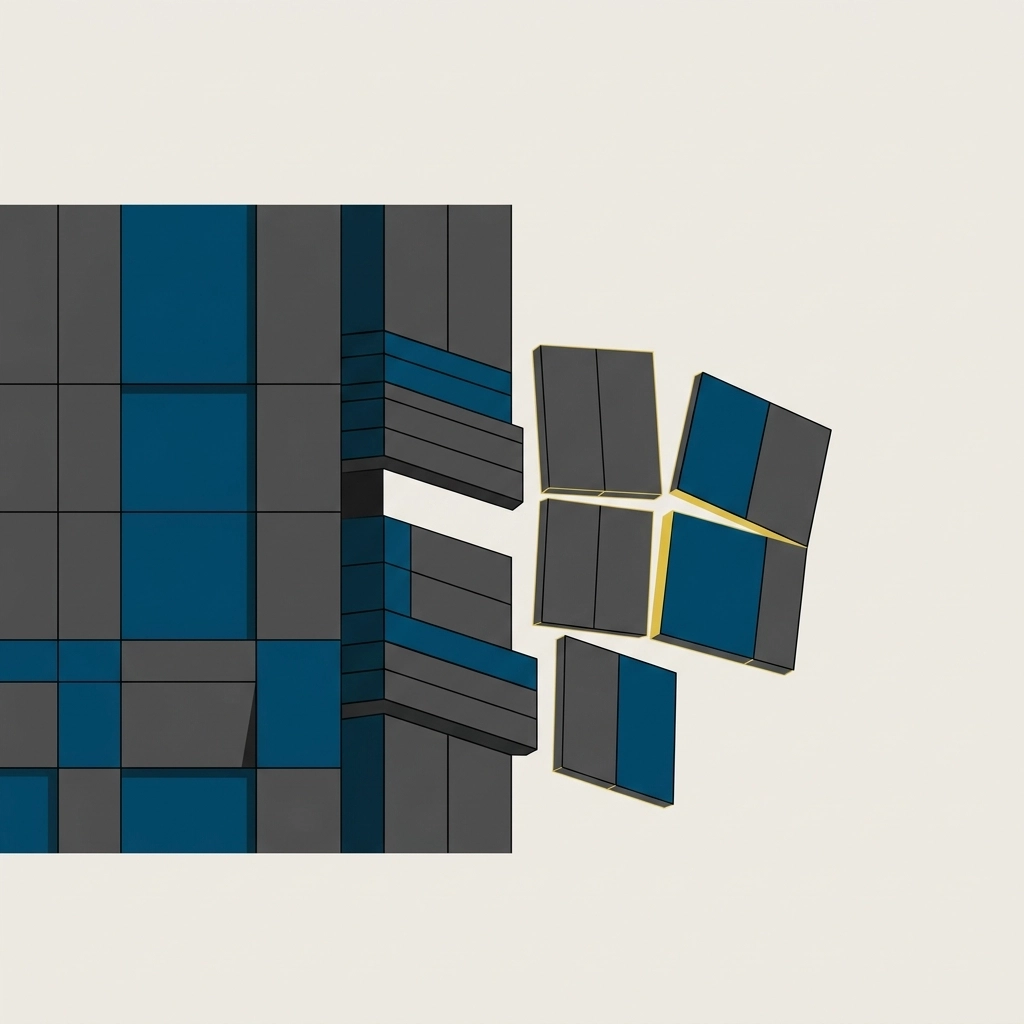
When that mismatch is left unexamined, Organizational Drift follows. Decision velocity slows. Priorities fragment. Leaders begin re-litigating choices that should already be settled. Execution loses coherence across functions. By the time this reaches the P&L, it is usually described as integration friction, market softness, or normal post-close turbulence. More often, it is a structural constraint on enterprise value.
Traditional talent diligence misses this because it remains too static and too interpersonal. It reviews biographies, interviews for confidence, and infers capability from past performance in a different system. It does not conduct a structural examination of how authority flows, how decisions get made, where accountability breaks, or whether the operating cadence can support the investment thesis. Without that layer of diagnostic clarity, the deal team is not evaluating execution capacity. It is making an assumption about it.
The practical cost is visible in the flat years. Value creation stalls not because the thesis was incoherent, but because the leadership system cannot metabolize the next level of demand. The plateau is usually architectural before it is financial. That is why serious diligence has to move beyond talent assessment and into leadership architecture.
The Rinnovare Lens: The RQ System™
At Rinnovare, we treat leadership as a structural challenge. The RQ System™ is not a product overlay. It is a diagnostic necessity when the investment thesis depends on a leadership system carrying more complexity than it has historically been built to hold. For a PE partner, this means moving beyond the interview room and into the diagnostic layer of the enterprise.
We evaluate the investment through three specific lenses:
1. The Structural Layer: RQ Diagnostic™
We assess the hard systems of leadership. Does the current operating cadence support the speed of the value creation plan. Are decision rights documented, or do they reside in the CEO’s head. The RQ Diagnostic™ complements the QofE by identifying where the leadership architecture is likely to fracture as the company scales.
2. The Emotional Layer: The Hidden Emotional Contract™
Every management team has unspoken agreements about what is protected and what is avoided. These patterns often privilege safety, legacy, or historical loyalty over performance. If the investment thesis requires meaningful change, but The Hidden Emotional Contract™ protects the status quo, execution will stall before the market sees it.
3. The Application Layer: RQ Roadmap™
Once the gaps are visible, the RQ Roadmap™ translates diagnostic clarity into leadership system redesign. It connects structure, accountability, and operating rhythm to the realities of the thesis so the organization can move from personality dependence to repeatable execution.

Strategic Moves: Integrating Leadership Diligence
For PE partners and operating partners looking to eliminate the leadership blind spot, the following moves reset the diligence standard:
- Map the Decision Architecture: Map the top ten enterprise-critical decisions. If more than five require the CEO's personal intervention, the leadership system is over-centralized and will likely experience Decision Velocity Decay post-close.
- Quantify the Drift Tax™ Early: Look for signals of misalignment between the executive team and N-2 leaders. If the strategic priorities degrade as they move through the system, the organization is already paying a tax on its momentum.
- Name The Hidden Emotional Contract™: Conduct a structural examination of the "unspoken rules" within the management team. Understanding what is culturally "undiscussable" is more valuable than any resume review.
- Apply the RQ Diagnostic™ During Diligence: Replace subjective interviews with a structural evaluation of the leadership system. This provides a data-driven view of whether the team can handle the complexity of the next era.
- Rebuild the Operating Model Around the Thesis: Ensure the meeting structures and reporting lines are designed for the future state, not the past. Use the RQ Operating Model™ to ensure the structure follows the strategy.
Closing Frame
Leadership architecture is a precondition for enterprise value, not a secondary consideration. Financial diligence can explain the business that exists today. It cannot tell you whether the leadership operating model is capable of carrying the business the thesis requires tomorrow. In a tighter market, that distinction becomes moral as much as financial. When leadership structure is left implicit, value creation slows, trust erodes, and avoidable strain moves into the system. Architectural clarity is not optional at that point. It is the work.


Author: Philip Curran, Founder & Principal
Date: Wednesday, May 6, 2026
Enterprise Value
Organizational Drift